How Much Does a Website Really Cost?
“How much does a website cost?” is one of the most common questions we receive.
Honestly, it is a bit like asking, “How much does a house cost?” The answer depends entirely on what you are building.
A five-page business website and a 20-page e-commerce website with online payments, inventory management, bookings, and a blog are completely different projects, even though both are called websites.
The final price depends on the project scope. That normally comes down to six main factors: pages, design, content, integrations, hosting, and ongoing maintenance.
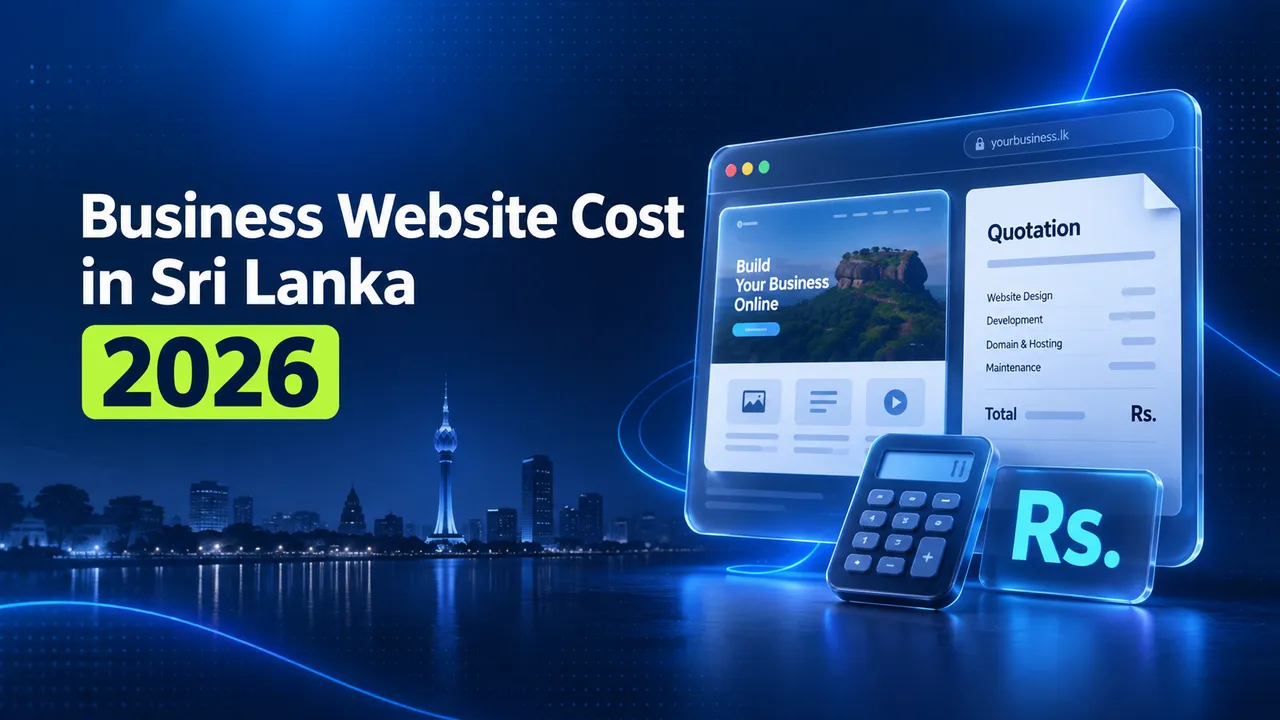
Here is what changes a website quotation and what businesses can roughly expect to pay in Sri Lanka in 2026.
1. Number of Pages and Website Complexity
More pages require more planning, design work, content preparation, development, and testing.
Simple Website: 3–5 Pages
A simple website usually includes:
- Home
- About
- Services
- Contact
- One additional page, such as a portfolio or gallery
This type of website is suitable for small businesses that mainly need a professional online presence, credibility, and an easy way for customers to contact them.
Standard Business Website: 6–12 Pages
A standard business website may include:
- Separate service pages
- Portfolio or project gallery
- Testimonials
- Frequently asked questions
- Blog
- Contact and quotation forms
This structure is better for growing businesses that want to explain their services properly and attract customers through Google.
Large Website: 12+ Pages
A larger website may contain:
- Multiple service categories
- Location-specific pages
- Resource sections
- Landing pages
- Case studies
- Regular blog content
- Custom forms and user journeys
More pages also mean more internal links, SEO planning, content writing, approval work, and quality testing.
2. Website Design
The type of design you select has a direct effect on the quotation.
Template-Based Design
A template-based website uses an established layout that is customised with your branding, colours, images, and content.
This option is normally faster and more affordable. It works well for small businesses that need a professional website without highly customised features.
Fully Custom Design
A custom website is designed specifically around your business, brand, audience, and goals.
The layout, sections, navigation, animations, and user experience are planned from the beginning. This requires additional research, design work, revisions, and development time.
It costs more, but it gives your business a unique website that competitors cannot easily copy.
3. Website Content
A website needs more than attractive colours and images. It also needs strong written content, photographs, and clear calls to action.
Client-Provided Content
The client provides the final:
- Written content
- Business information
- Logo and branding
- Photographs
- Product or service details
Supplying complete content before development begins helps reduce the cost and prevents unnecessary project delays.
Content Support
If the content is not ready, the project may require:
- Website copywriting
- Professional photography
- Image editing
- Product-data entry
- AI-assisted content preparation
- Search-engine optimisation
These services add to the quotation, but good content normally improves both search visibility and customer conversions.
A beautiful website with weak or generic content will still struggle to perform. Content is not a small extra—it is a major part of the website.
4. Website Integrations
Integrations are one of the main reasons website quotations can vary significantly.
Common website integrations include:
- WhatsApp Business click-to-chat
- Online booking or appointment systems
- PayHere, Stripe, or other payment gateways
- Product catalogues
- Shopping carts and checkout systems
- CRM integrations
- Email-marketing connections
- Custom quotation forms
- Job application forms
- Language selectors
- Inventory-management systems
- Third-party APIs
Every integration requires configuration and testing.
The more systems your website needs to communicate with, the more development time the project will require.
5. Domain and Hosting
A domain is the website address customers use to find your business. Hosting is the service that keeps the website available online.
Shared or Basic Hosting
Basic hosting is more affordable and may be suitable for smaller websites with moderate traffic.
However, the performance and available resources can be limited because multiple websites share the same server.
Managed Hosting
Managed hosting normally provides better:
- Website speed
- Security
- Backups
- Monitoring
- Technical support
- Uptime
Better hosting becomes important when your website generates real enquiries or sales and the business cannot afford regular downtime.
Hosting and domain registration are normally charged monthly or annually. They are not permanent one-time costs.
Before approving a quotation, confirm whether the domain and hosting are included, how long they are included for, and what the future renewal price will be.
6. Website Maintenance
A website is not permanently finished when it launches. It needs ongoing attention to remain secure, accurate, and reliable.
Website maintenance may include:
- Security updates
- Regular backups
- Small content changes
- Technical support
- Website-speed monitoring
- Uptime monitoring
- Broken-link checks
- Basic SEO maintenance
For a practical maintenance routine, read our monthly SEO checklist for small businesses.
Some quotations cover only the initial website build. Maintenance is then charged separately.
Other packages may include a limited maintenance period after launch. Always confirm what is included, how long the support period lasts, and what will be charged afterward.
Website Price Ranges in Sri Lanka for 2026
The following prices are starting estimates. The final quotation will depend on the confirmed scope, content, integrations, and delivery requirements.
Starter Business Website — Rs. 80,000 to Rs. 95,000
This package is suitable for new and small businesses that need a professional online presence.
It may include:
- Three to five pages
- Responsive desktop, tablet, and mobile design
- Business branding and colours
- Client-provided content
- Contact or enquiry form
- WhatsApp contact button
- Basic on-page SEO setup
- Website-speed optimisation
- Browser and device testing
Additional pages, copywriting, premium animations, or advanced integrations will be quoted separately.
Business Website — Starting from Rs. 100,000
This package is suitable for growing businesses that need more pages, better content organisation, and lead-generation features.
It may include:
- Six to twelve pages
- Custom-designed sections
- Individual service pages
- Portfolio or project gallery
- Testimonials
- Blog functionality
- Contact and quotation forms
- Basic integrations
- Basic on-page SEO
- Responsive and performance testing
The final price will increase if the website requires copywriting, multilingual content, booking systems, advanced animations, or custom forms.
E-Commerce Website — Rs. 120,000 to Rs. 150,000+
This package is suitable for businesses that want to display and sell products online.
It may include:
- Product catalogue
- Product-category pages
- Individual product pages
- Shopping cart
- Checkout system
- Payment-gateway integration
- Order-management features
- Customer contact options
- Mobile-responsive design
- Basic product SEO setup
The final price depends on the number of products, payment methods, delivery rules, inventory requirements, product-data entry, and required integrations.
Custom or Enterprise Website — Quotation Based
A custom quotation is required for organisations with complex workflows or specialised technical requirements.
The project may include:
- Fully custom UI and UX design
- Customer or staff portals
- Custom dashboards
- Management systems
- Multiple third-party integrations
- Advanced multilingual functionality
- Custom databases
- User accounts and authentication
- Ongoing development and support
The quotation is prepared after the requirements are documented and the project scope is approved.
Website Maintenance — Starting from Rs. 5,000 per Month
Our standard maintenance plan starts from Rs. 5,000 per month, depending on the required level of support.
A three-month upfront maintenance plan may be available for Rs. 13,000, depending on the agreed scope.
Domain registration, premium software, paid integrations, payment-gateway fees, hosting, and third-party subscriptions should be clearly listed separately in the final quotation.
What Cheap Website Quotes Often Leave Out
A very low quotation can look attractive until you notice what is missing.
Common exclusions include:
- No basic SEO setup
- No website maintenance plan
- No backup system
- Generic and poorly edited templates
- Hidden hosting renewal charges
- Hidden domain renewal charges
- Weak mobile optimisation
- No speed optimisation
- No browser testing
- No testing of contact forms
- Limited support after launch
- Unclear website ownership
A website that is cheap to build but slow, difficult to find, or outdated within a year can cost the business more in lost enquiries than it saved at the beginning.
How to Compare Website Quotations Properly
Do not compare quotations using only the final price.
Ask every developer or agency the following questions:
- How many pages are included?
- How many design revisions are included?
- Is the written content included or provided by the client?
- Are photographs and image editing included?
- Which integrations are included?
- Which features will cost extra?
- Is the domain included?
- Is hosting included, and for how long?
- What are the annual renewal costs?
- Is website maintenance included?
- Is basic SEO setup included?
- Who owns the domain, hosting account, and website files after payment?
- What support is provided after launch?
- What is specifically excluded from the quotation?
A professional website quotation should clearly define the scope, price, payment stages, timeline, client responsibilities, exclusions, and post-launch support.
If those details are missing, the cheapest quotation may not remain the cheapest project.
Final Thoughts
The real cost of a website is not only the number written on the invoice.
What matters is whether the website performs its job: helping customers discover your business, building trust, and converting visitors into enquiries or sales.
At NexGen Devs, every quotation is prepared around the actual number of pages, design requirements, content, integrations, hosting, and maintenance required for the project.
That gives every client a clear scope without guesswork, hidden additions, or unexpected costs halfway through development.
Want a clear, no-obligation quotation based on your actual business requirements? Contact NexGen Devs and tell us what you want your website to achieve.